
5 Questions with Subhash Jaireth
By Mona Rahimpour
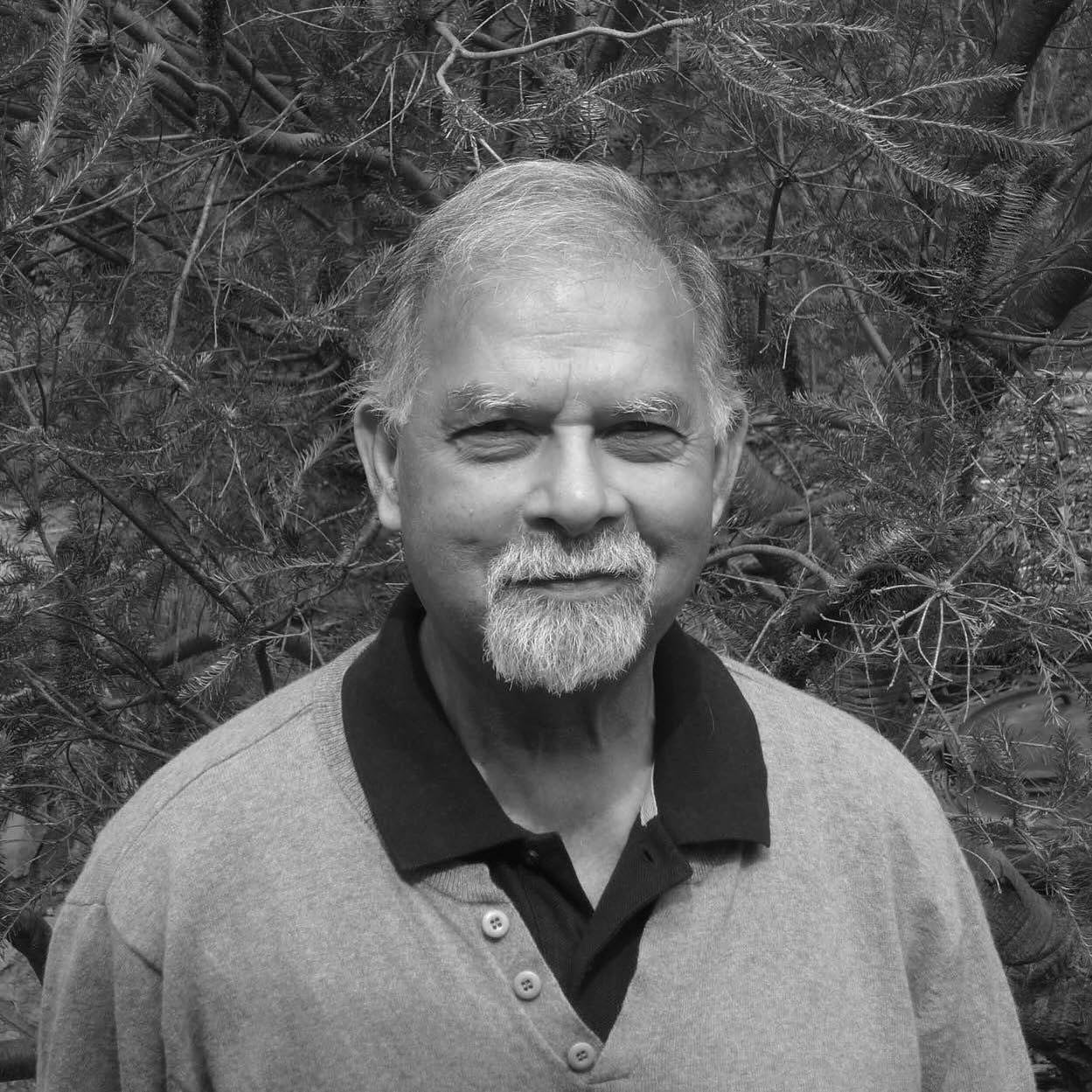
Subhash Jaireth writes poetry but he isn’t a poet. He writes fiction and non-fiction but he isn’t a novelist. He thinks but he isn’t an academic. He is a dilettante who dabbles with ideas to explore and learn. He inhabits polylingual and polycultural world both real and imagined. Translation is his mode of being and becoming.
Subhash speaks to Mona Rahimpour about his latest collection, Lamentations.
No.1
Lamentations has a cosmopolitan movement through lands and languages, paying homage to some of the prominent figures of world literature such as Italo Calvino, Bashō, Hafez and Jorge Luis Borges along the way.
If one looks at the stunning image of our planet, the Gaia, taken by Artemis II, one would notice that our land is surrounded by water. Humans divided that water into oceans, seas, straits, gulfs, bays and rivers giving them different names. All rivers begin from the waters of a single global ocean or wetness and merge with it. My book of prose poems or proems is about water and wetness. It is cosmopolitan in its being before we invented the word cosmopolitan.
No.2
Lamentation, from the Latin lamentatio, often registers an expression of grief or mournful sorrow; your work subtly gestures towards forms of recuperation as well. What drew you to the word “lamentation”?
The book tells the sad stories of water in rivers, creeks and seas and of the land in which and with which they live and endure. Most experts believe the humans in the Anthropocene have become a powerful geological agent who has transformed, often destructively, the global wetness. Rivers and lakes do whatever they can to endure but many can’t recover. Grief and loss they have suffered and will suffer drives the lamenting voice in these poems. But the water and Gaia know that they had existed before the appearance of Homo sapiens and would outlive them. I sometimes wonder if Gaia regrets that it engendered its most ingenious invention, although it happened through a protracted period of trial and error.
No.3
Most pieces in the book possess a certain calmness on the surface, yet underneath that composure I often felt a persistent restlessness, something almost like a current beneath still water. At times the prose has a swirling, meditative musicality, even when the narrative remains haunted by a sense of loss or by the pains of historical fractures. Can you elaborate on the relation between the feeling and form in Lamentations?
The narrative in the prose poems is driven by two voices: one male and the other female. In addition to them there is the voice of the poem or language which is heteroglossic and heterovalent. The book tells the stories the indigenous peoples in the land which is now called Australia, tell about their rivers, lakes, creeks and bays. Like rivers many of the languages have been lost and are now slowly emerging. To write and read, and to speak and hear these words is important to remind us of what was lost and what needs to be resurrected. Glossotaligia is the word that expresses the grief we feel for the loss of languages, memory, stories, and cultures. The poems also tried to make the water speak and be heard by us. I am not sure if the book has fully succeeded. The water speaks and hears in its watery way and we can only express it the way we speak and hear. The only way the two can achieve consonance is through creating an empathetic event of co-beingness between the water and us.
No.4
Lament as a genre often looks backward, toward a lost object that can't be simply retrieved. The narrative you weave in Lamentations, however, is also intensely concerned with the movement forward; with rivers, journeys, encounters and crossings. Do you consider writing to harbour the capacity of transforming loss into a different form of continuity?
Looking backward gets its meaning when placed adjacent to looking forward. They are the two sides of a coin or the two faces of Janus, the Roman god of bridges. They happen simultaneously. ‘Speech is a river of breath’, the book says. To speak we not only need vocal apparatus but also ears. It is known that speaking and hearing developed in mammals simultaneously. With them the brain and as well as our nervous system. To make speech understandable we need to hear and listen. It’s human breath which helps us achieve that. It is converted into audible signals by ears and our nervous systems. When we speak and someone hears and listens we share breath that flows in and out like streams.
No.5
The visual arrangement of the writing in Lamentations is distinctive. The pieces are structured as prose, yet they also edge toward poetry in their spacing, compression, and attention to the page. Could you tell us about this formal choice?
I am very grateful to Phil Day, a wonderful book designer, artist, painter, and writer, for making this book. He is one of the three creators of the book which also include: the water, and the poet. His painting Vegetable forms the cover. I am very grateful to Phil Day for designing the book. For him the narrative of the poems is itself a large river. He created a design, including the type-setting, that reflects the river-ness of the poems. The poems are set as a column on the right hand side of the recto page. The verso side is blank. The poems and sequences of poems don’t carry titles. They all constitute streams of the main river called Lamentation(s). The book is asked to be read as a single composition. Poems belonging to one thematic or geographical sequence are separated by large spaces between them. Within each sequence the last line of each poem is centre-justified and doesn’t end with a full stop. A full stop closes the last line of the final poem of each sequence. The poems in each sequence are separated by a black dot. There are no footnotes or endnotes. No glossary of words or names. It is hoped that readers will be able to grasp geographical locations from the text itself.
(Credit: Teja Binti Solah)
Find out more
Read more on Subhash’s substack, Thinking Aloud.
In Lamentations, Subhash Jaireth composes a river of voices—philosophical, tender, and reverent—flowing through landscapes of memory, loss, and renewal. Part meditation, part love story, and part elegy for the natural world, these prose poems move between rivers and deserts, Bashō and Hafez, Australia and Persia, tracing how water remembers, how language listens, and how grief transforms into grace.
Through the dialogue of two consciousnesses—intimate, questioning, and profoundly attuned—Jaireth explores the porous boundaries between the human and the elemental. Rivers become voices, rocks become listeners, and words themselves turn liquid, carrying echoes of the world’s oldest stories.