
5 Questions with Omar Musa
Omar Musa is an author, visual artist and poet from Queanbeyan, Australia. He has released one novel, four books of poetry (including Killernova), five hip-hop records, and an acclaimed one man play, Since Ali Died. His work has appeared in The Best Australian Stories and Best of Australian Poems.
His debut novel, Here Come the Dogs, was long-listed for the International Dublin Literary Award and the Miles Franklin Award. He was named one of the Sydney Morning Herald’s Young Novelists of the Year in 2015.
He has had several solo exhibitions of his woodcuts, including his most recent collection All My Memories Are Mistranslations.
He is based between Borneo and Brooklyn.
No.1
Omar, you’re a multidisciplinary artist: visual artist, poet, hip-hop musician, playwright and novelist. How do you juggle these different forms, and do you see these as independent of one another or are they in conversation with each other?
All of these different forms are in conversation with each other. I used to try to keep them separate, but as I get older, I find that more and more they want to merge and meld. I find there’s a lot of playfulness in the process of dissolving perceived borders between artforms, and the results can be surprising and exciting. I’m interested in borderlessness as a concept and theme anyway, especially when thinking about Nusantara / island South-East Asia, so I’m stylistically trying to reflect that. Hopefully, this approach helps to create artistic vocabularies and a fun, unsettled sense in the reader. With Fierceland, I tried to use all the weapons in my arsenal, whether it be experimentations with visual art or making the voice of the forest like a free-styled, free form jazz, to make a form of fiction that felt fresh.
No.2
Fierceland is your second novel since the award-winning Here Come the Dogs, published more than a decade ago in 2014. On the books front, in the intervening decade you have published four poetry books, including Killernova in 2021, which comprised woodcut prints you had made. What does your novel writing process look like?
I want my novels to have a sense of energy, that is, immediacy, but the process is so long that it is anything but immediate. Finding the right structure or vessel to hold this energy means a lot of trial and error. I mentioned playfulness before, but the truth is that in trying to find the right way to convey this energy, I often follow years’ long roads that turn out to be dead-ends. Which means feeling constantly lost, frustrated and disconsolate.
So sometimes, I suppose, the process looks like an old chook pecking away through the ruins; slowly, for many years, trying to collect, trying to find things of sustenance. Reading, reading and more reading. Poetry, plays, novels, historical accounts of British North Borneo, weird hagiographies by palm oil barons. Having lots of conversations. Listening, listening, listening. That’s not to say there isn’t joy in there, but it’s usually brief—during a spark of illumination when you read something that opens a door, or you have a good conversation, or have a tiny breakthrough on a paragraph level.
No.3
What has helped you discover your own voice throughout the years?
Sorry to keep repeating myself, but I think in referring to playfulness, I probably also mean risk and a willingness to make mistakes. This does mean that there’s a trail of stuff I’m embarrassed about out there, but I try to give myself a bit of grace—the fuck-ups often help you find the gold. This element is deeply psychological: facing and overcoming fear and self-doubt, or even trying to alchemise it, on a daily basis, is part of finding your voice. Reading widely, travelling and going to lots of art exhibitions has been crucial [for me]. Also: listening closely to the musicality of people’s colloquialism and finding the poetry in slang and the rhythms of everyday speech. I’ve also always aimed for a balance in my work between spareness and fecundity, so that there’s a strong element of contrast in the way the message is conveyed.
I’ll let you in on another one: I think having studied horticulture at TAFE for a bit (I’m a horticulture school dropout) and getting to know plants better helped me find my voice with this particular novel!
No.4
There are snippets of Manglish in Fierceland. Can you speak more to the utility of featuring different types of Englishes in anglophone writing?
The fact of the matter is that the language I wield best is English. But within that, I like to mess around with it. “Decolonising” perhaps feels like too grand a word for what I do, but I will say this: I want the reader to engage with this book on its own linguistic terms. I would be fairly uncompromising about that, and of course wouldn’t use that strange, othering practice of italicising “foreign” words the way it was often done in literature. I hoped that using Manglish and Sabahan slang, which have their own musicality, would help capture the soul and feel of the place and its characters. How we speak is so inherent to who we are. I listened closely to people around me in Kota Kinabalu where I was living, and to my family members of different ages. I also had a close local reader, Joan Lojinki, who hopefully helped me enrich the speech cadences and particularities of the different characters and point out blind spots (well, whatever the auditory version of that is) I may have had when it came to this.
No.5
Speaking of languages, in part four of the novel, you feature a collection of poems titled Song of the Wood, written in (untranslated) Bahasa Melayu by one of your characters, Rozana, a Malaysian-Australian artist living in Sydney. Out of the 16 poems, only one is in English. Can you speak more to this?
One of the characters, Crazy Auntie, wanted to translate a simple poem “The Song of the Wood” in English into all the spoken languages of Sabah (about fifty-four), the state in Malaysian Borneo that my dad comes from. This means that I, as the author, had to try and follow her footsteps. It was a really difficult, enriching, enlightening process. Many of the local languages are facing erasure and speakers are hard to find. And with no funding or institutional backing, I was out on my own. So over about three and a half years, I had to find friends of friends, or make contact via WhatsApp with people in remote places, to help me. It was challenging, but the enthusiasm people responded with kept me going. I ended up getting sixteen translations across Sabah and Sarawak, which mightn’t sound like much, but in the given situation, it was pretty good going.
I was inspired by conversations with my friend Gregory Pardlo, and the Dakar Translation Symposium, which talked about de-professionalising and democratising translation. It was super cool: with a few of the translations, a whole family in a kampung gathered around to work on it together. I can also think of an Iban elder, who sent the poem back to me and the shape of it looked quite different. It turned out that the poem had reminded him of a certain type of heroic ode in Iban, and so he had rewritten it as such. I was stoked that the poem had morphed and taken a life of its own in a different language. On a personal level, I was especially psyched when I got the translations back for the languages of my grandmother, biological grandfather and step-grandfather’s people (Kadayan, Suluk and Tidung, respectively)—having never grown up around them, even just seeing the shape of them on the page, being able to stumble through them aloud, helped me feel closer to my origins.
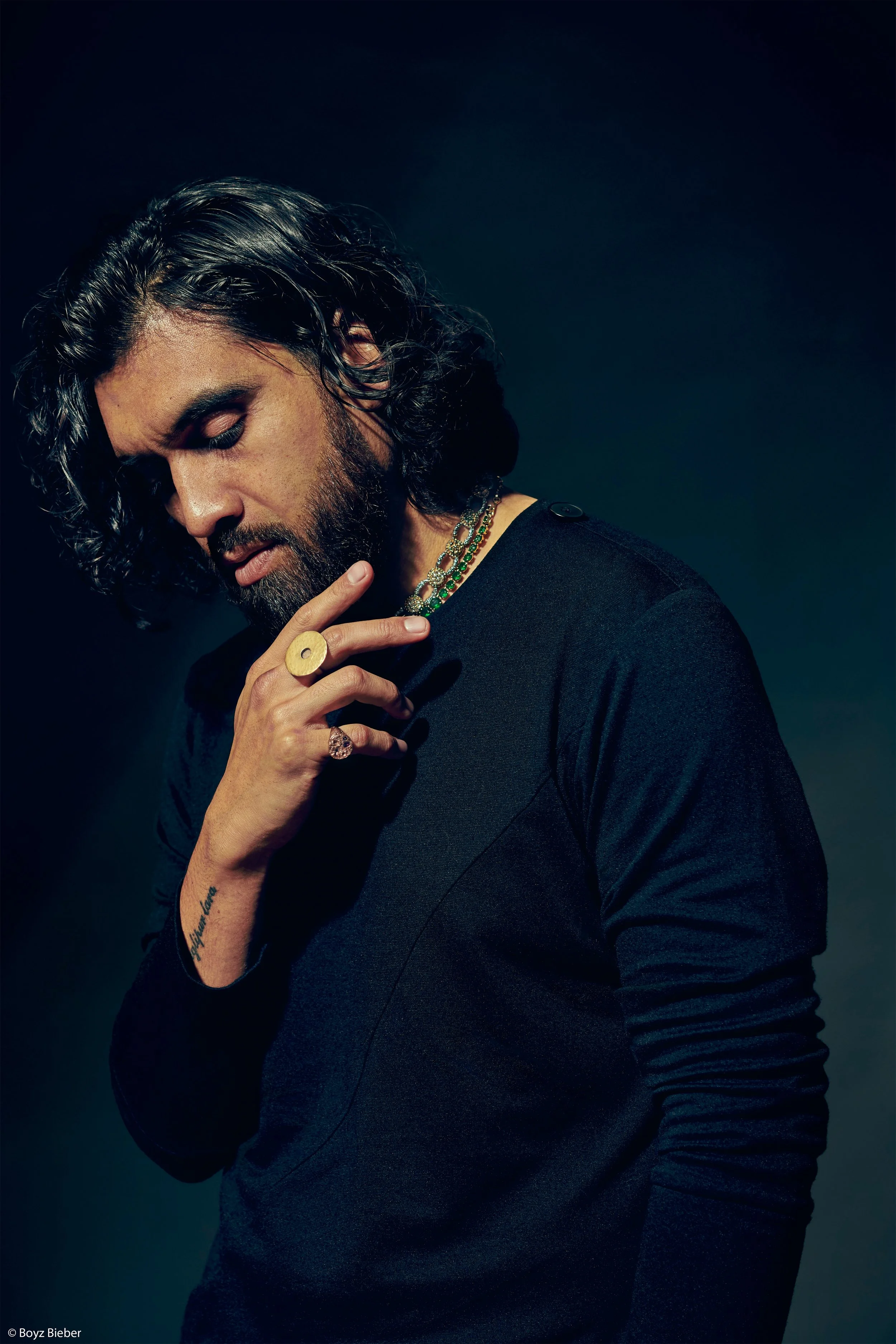
(Credit: Boyz Bieber)
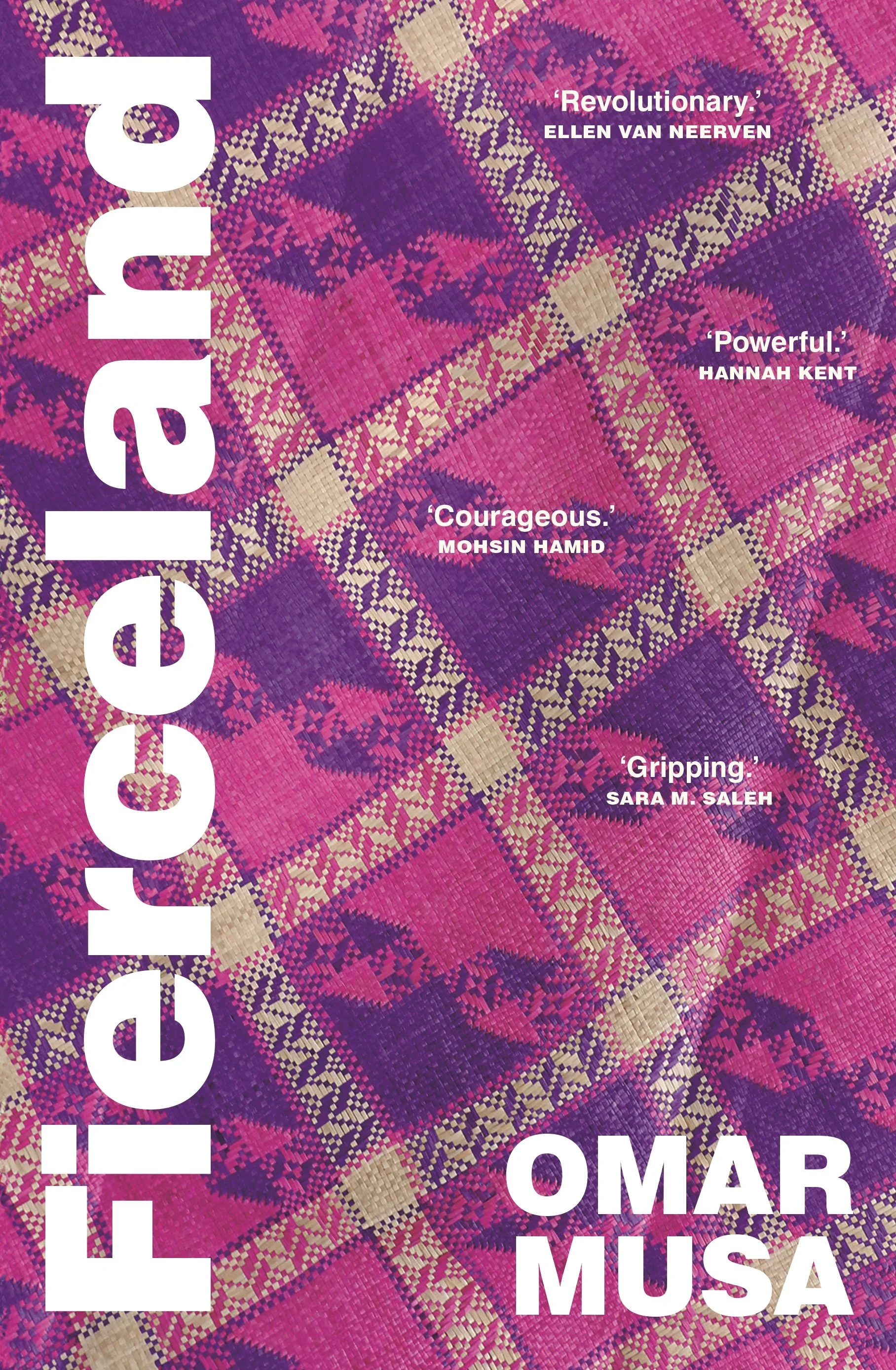
Find Out More
How do you mourn your father when you know his secrets?
After many years abroad, Roz and Harun return to Malaysian Borneo for the funeral of their father Yusuf – and to reckon with their inheritance. A renowned palm-oil baron during Malaysia’s economic rise, Yusuf built the family’s immense wealth by destroying huge tracts of rainforest. What his children know is that he was also responsible for the violent disappearance of a man who stood in his way.
Harun has become a successful tech entrepreneur in Los Angeles, Roz is an artist struggling to stay afloat in Sydney. Now they want to return something their father stole from the forests of their homeland. In their quest for redemption they grapple with the legacy of power and corruption, dreamers and exiles, thugs and zealots. Most dangerous of all, they are haunted – by the ghosts of colonialism, the ghosts of family, the ghosts of language, and the ghosts of the forest itself.
A trailblazing journey across the globe, Fierceland weaves the past and the present into an emotionally powerful family saga that plays out at a mythical scale.
Get it from Penguin Books here.