
Interview #230—S. Shakthidharan
by Smriti Daniel
S. Shakthidharan is a Western Sydney storyteller with Sri Lankan heritage and Tamil ancestry. He’s a writer, director and producer of theatre and film, and a composer of original music.
His debut play, Counting and Cracking, was voted ‘the best Australian play of the 21st century’ in an ArtsHub poll, among many other honours.
In 2025, he premiered two new works, The Wrong Gods and Two Blood, and in 2026, he was awarded the Windham-Campbell Prize for drama.
Shakthi speaks with Smriti about complicated inheritances, the labour of love across generations, and gathering up a life in one long breath.
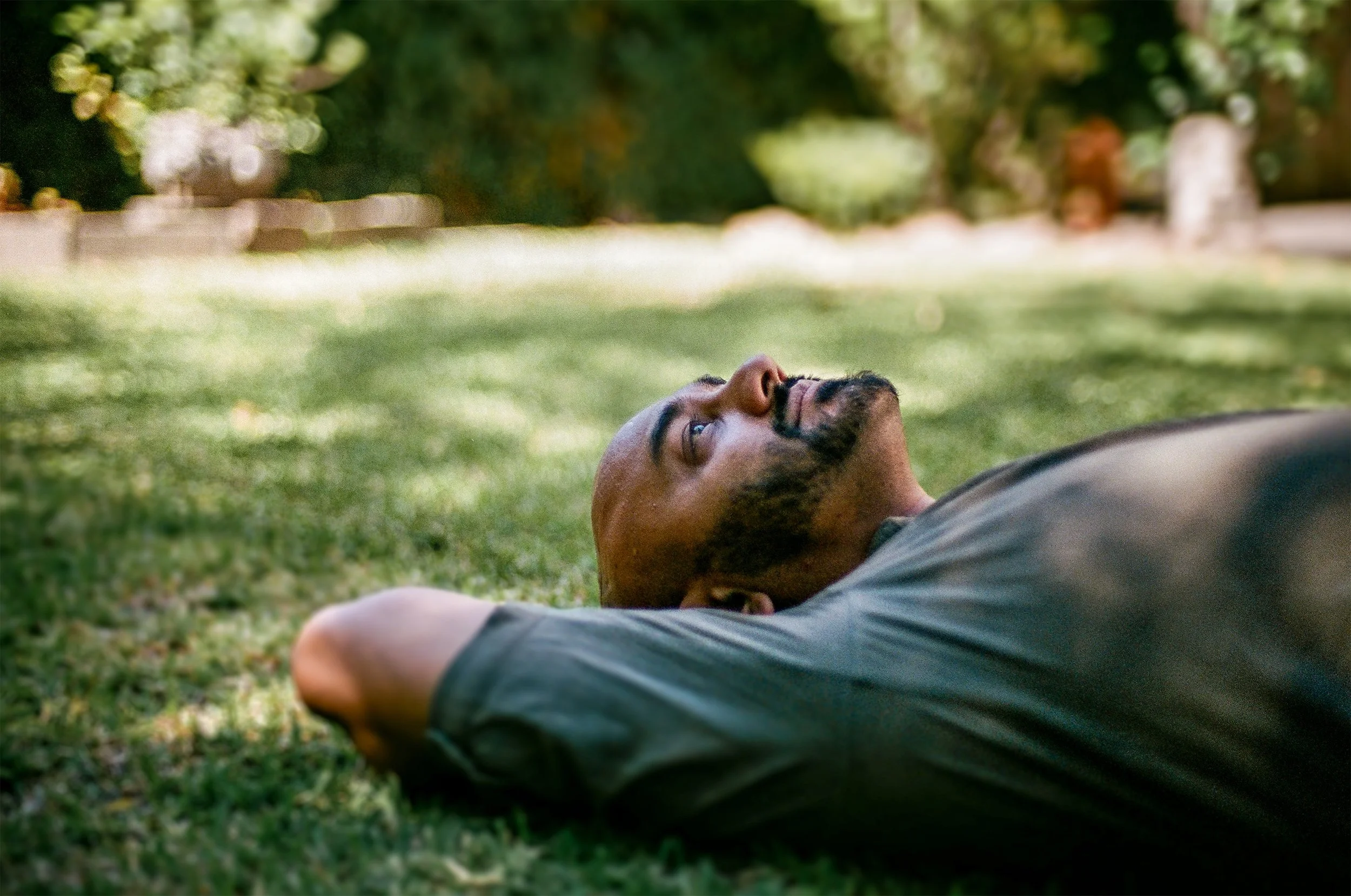
One of the things that really struck me as soon as I picked up Gather Up Your World in One Long Breath was what a beautiful book it is. I wanted to ask you about that because if there was ever a book that could be judged by its cover, it’s this one—the title, and the gorgeous kolam and illustration within. How important was that visual identity to you, and how did you imagine the story landing?
It was really important. One of the beautiful things about doing the book with Powerhouse Publishing is that Powerhouse is also a museum; they were equally committed to the ideals I talk about, which I don’t think a traditional publisher would have been. The book contains some really hard-won truths. There’s a sacredness and preciousness to that, and I didn’t want to disguise it. So, I wanted the design to reflect that rather than costume it—which can be a valid approach too, pretending the book is something else so people pick it up and are surprised—but we felt it should feel like its words do.
There’s an interesting mix of something earthy and tangible—the textured brown paper and then the blue foil of the title, almost like water seeping from the ground. It was also a diasporic collaboration: the book’s designer, Rekha Dhanaram, is Tamil. And the end pages—which I’ve learnt is the name for that part of the book—where the painting is, were done by a Sri Lankan artist I was introduced to, Susiman Nirmalavasan. Nirmalavasan speaks a little English, but mostly Tamil; Rekha’s Tamil is Indian Tamil, and my Tamil is like a five-year-old’s. So, our Zooms getting the cover together were funny—different kinds of Tamil, different levels of competence— but the result is beautiful.
We really wanted each chapter to have a breath, where each chapter has its own subject matter, its own form and feeling. Initially we thought about using blank pages in between chapters, which would have been beautiful, and then Rekha suggested using a kolam instead. That felt right—kolams come together and take different shapes each time. She researched kolams that matched the feeling of each chapter.
When you were young, did you imagine writing a book?
I’ve never thought much about writing a book, maybe because I love books too much— they’re as essential as breathing. I could see theatre as something separate to myself to do, whereas books are like sunlight to me. So, I'm really grateful for the needs of this project, for bringing out that side of me.
But maybe like a psychologist would say that I wasn't ready or something, like the stuff that’s too close to us, we’re afraid of.
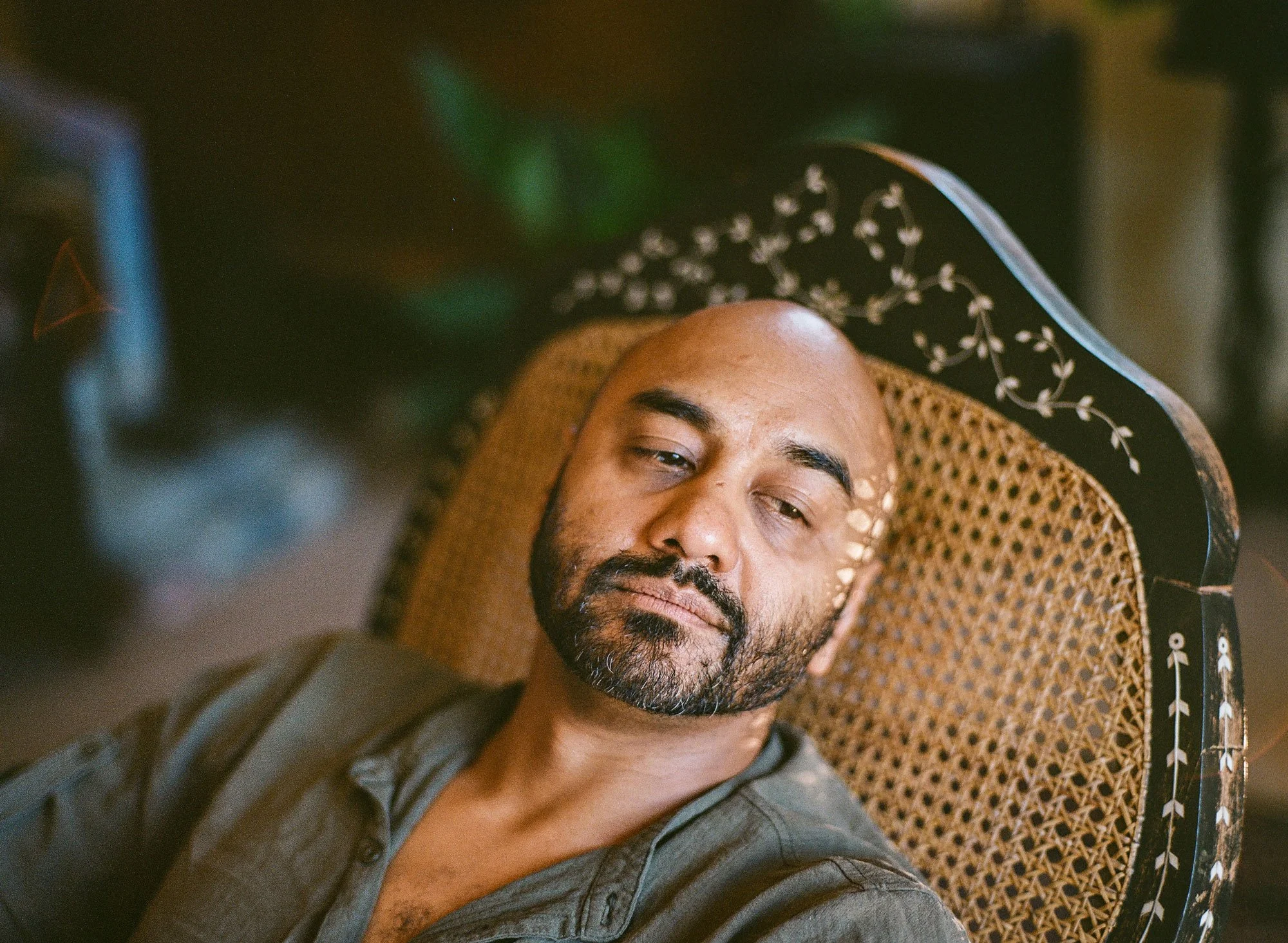
I think the things that are closest to us are often the hardest to face. I honestly felt triggered reading some of your book because it felt so close to me as well. It brought up questions of family and connection in a way I wasn’t expecting. As a migrant, I’ve often tussled with disconnection from the community I came from and reconnection here, which can feel more boundaried. But what you write about is another level altogether—this willingness to sit with discomfort and still reach for deep connection. I found that both beautiful and wild, this readiness to do it again and again throughout the book, with everyone you love.
Your mother and grandmother, especially—what mythic women. They built and unbuilt and rebuilt worlds. Their choices ripple through your life, your wife’s, your children’s. In other situations, people might have stepped back, but you step forward, you step into it. What have been the joys and challenges of that?
That’s really beautifully said, and it’s great to hear you say that. I hope that, despite being triggered, it was worth it.
To me, your question has an interesting opposite: why is it so hard to do that? Why does it feel wild to lean into the complexity of who we really are? I think it’s because we believe that truly trying to understand ourselves—and consequently the people we love—will be so uncomfortable that it might fail. And if it fails, then instead of the niceties that hold our relationships together, we’re left with nothing. That chasm is frightening, so we don’t act.
I couldn’t have written this book before Counting and Cracking. That work taught me about generosity of spirit—first from my collaborators, and later from audiences. It showed me that humans are far more expansive and capable of holding complexity than we think. It helped me trust the human condition a little more. Having children did the same. My wife and I discovered that kids are incredibly capable of handling complexity—they’re uninterested in dishonest ways of relating. Somewhere in adolescence we lose that, but Counting and Cracking and my children together opened a portal to another way of being.
That gave me the courage to leap into the chasm with this book. It hasn’t been joyful, but it’s been fertile. Even though it was difficult, it’s deepened my closest relationships, allowing us to be together in ways that once felt impossible—better than temporary joy. Gather Up Your World has helped us reframe, remember and rebuild fuller versions of our relationships—my mother, my wife, and, I’m sure, eventually my children. That said, it wouldn’t have made a difference with my father—even if he were alive, he wouldn’t have read it. But I’m ready now. And on a professional level, the book becomes an offering—something I hope is cathartic and useful for others who want to do this work too. At an event in Melbourne, Nam Le described the book as a gift, which was humbling. He said there was a surprise in it—a sense of, “Oh, literature can be this.” That felt lovely to hear. Anyway, that’s a long answer.
Thank you for that. I’ve been thinking about the house your grandmother built, which you return to again and again in Gather Up Your World—what a monumental task it must have been. It was painstakingly dismantled in Sri Lanka and rebuilt in Sydney. It’s both extraordinary inheritance and crushing burden.
There’s that beautiful chapter where you speak directly to the house—and the last section, where you and your children are playing hide-and-seek through its rooms. What an excellent house for that. What’s the loveliest part of living in it now, together as a family?
What I treasure beyond belief—and I’m not entirely sure why, maybe I’ll figure it out as I’m answering your question—is the relationship between the Australian environment and the elements of the house that come so fiercely from Sri Lanka. The front doors face northeast, so over the course of the day the sun rises at the front, travels across the roofline, and sets behind the house. In the afternoon there’s this extraordinary capacity to take in the light. The jacaranda leaves from my neighbour’s tree, the casuarina in the little park behind the house, the lilly pillies my wife and I planted that are so tall now—all of it moves with the breeze, and the dappled light filters through into the back rooms.
It falls across the daybed my great-grandmother used to sit on, over the Lego sets of my children, across the clothes cupboard and bed my mother had as a girl—the same one my eldest son sleeps in now. That interrelationship—of Australian light falling across objects of our past—makes me incredibly happy. Maybe it’s because it’s a visual representation of the complexity of my identity, of the multiple places we come from. Somehow, it all fits together beautifully.
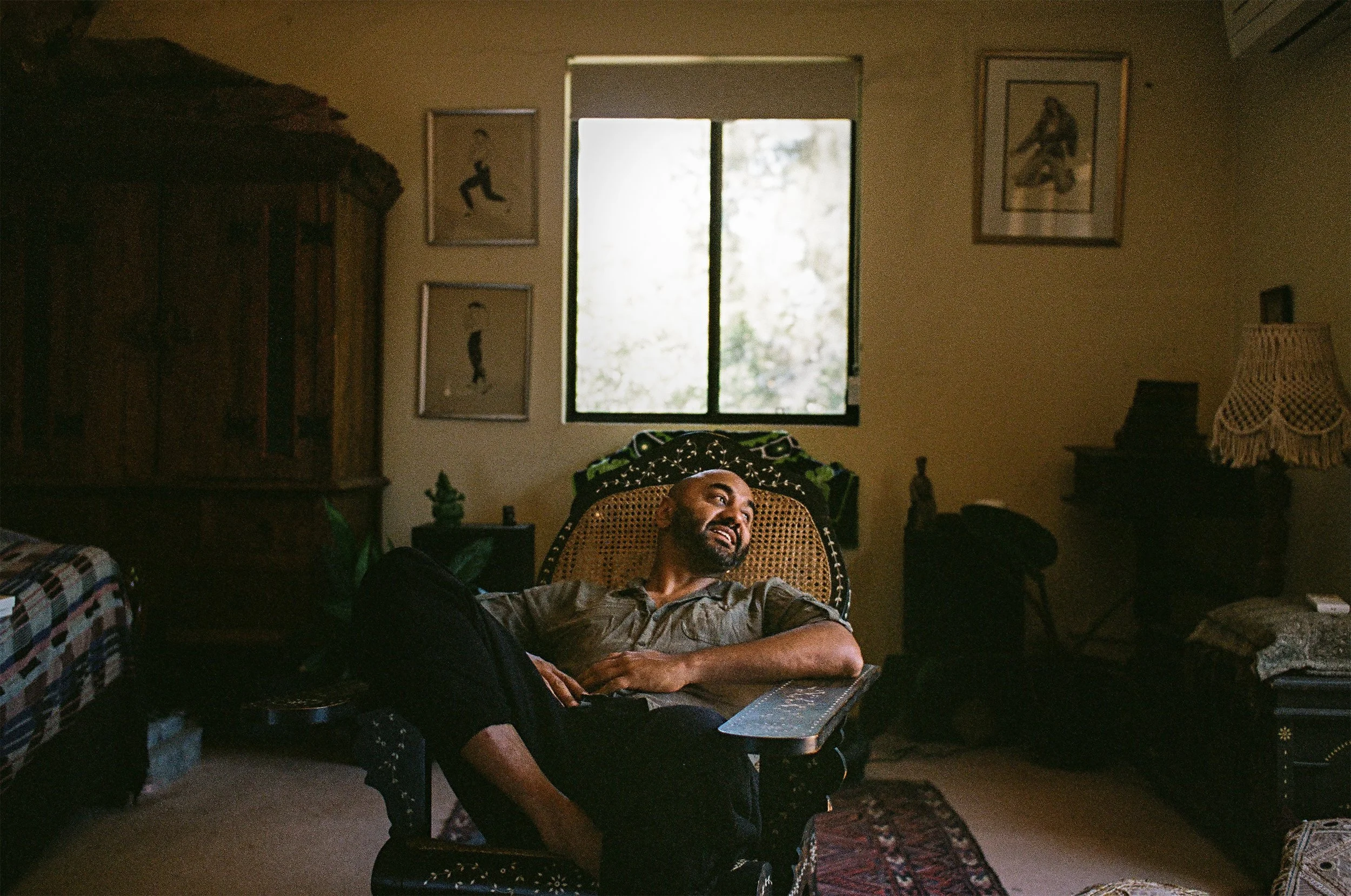
You mentioned your father earlier—and how he might have chosen not to read the book. For many years, you were estranged from him, until a friend—Uncle—told you where to find him and encouraged you to make contact. You set much aside to try to build a relationship again. Old age had already taken so much from him, and you were witness to it. What struck me was the number of unfinished conversations you carried—and how you were drawn into the emotionally and physically taxing role of carer without the promise of closure. How did you begin to think about closure in that time, in a way that allowed you to remain present with him? And have you learned, perhaps, to live within the unfinished conversation?
I think there were two stages to it—actually, three. Initially, when Uncle came to me and I found where my father was living, I’d already prepared myself. I knew that seeing him again wouldn’t be satisfying. I went in without expectations, and we met every Sunday. Being present with someone who, for their own reasons, can only give you so much—if you treat everything they offer as a bonus, it can actually be quite beautiful. I was comfortable seeing him as a kind of stranger I shared DNA with. And that helped, because strangers have space to grow into.
But when he got sick, it became much harder. It took a lot from me; he needed a lot from me. And I was upset, because part of me felt he didn’t deserve it. But that’s different from what the right thing to do is. I don’t believe in a justice system where everyone gets what they deserve. Many in my community do, after what we’ve been through with the war, but I’m not convinced it gets us anywhere. Even when people “get what they deserve”, the pain they caused doesn’t vanish. I feel sorry for him—he just didn’t catch a break his whole life. Once someone takes so much from you, it’s hard for them to remain a stranger, and that’s what I explore in the book. You want them to be your father, because otherwise, why are you doing all this?
When he finally got so sick that the doctors said he was going to die, we agreed to give him morphine. He hung on for a week. One night, knowing the end was close, I came home from the hospital, sat down at my computer, and wrote the first draft of the second half of that chapter. I realised I was writing to remember—and also to make peace with an intractable situation. If he was going to die, nothing could make it fair for him or for me. Writing became the act of making peace with that—the cold fact that life is sometimes just unfair. It really helped. And on a personal level, it was a way of making sure I didn’t become like him. As a book, it’s an offering—to people who have distant fathers, who are trying, in their own ways, not to harden in the same way.
I was thinking about something I’ve seen in my closest friends—and in your book too—that when you have your own children, you begin to understand your parents better. But you’re also angrier at them for the things you can’t understand, or couldn’t imagine doing to your own child. Those two feelings seem to sit side by side. Where does this moment find you, as a father?
It depends on what your philosophical position is about humans—how you react to that moment when you arrive at it as a parent. The initial instinct, which I think we all go through, is: I could never imagine doing this to my child. Why did my parents do this to me? But if you sit deeper in that thought—and I believe that, apart from psychopaths, people always do things for a reason—you realise those reasons are often buried deep in the heart, sometimes below consciousness. Still, they’re there. And if you believe that, as I do, then you start to understand the situation your parents were in, the pressures that shaped them.
As I write in the book, when I came to terms with how different my mother’s life turned out from what she imagined, I understood her. That’s not the same as excusing it—it just means I see it clearly. And when I thought about how much shame my father must have carried—losing his job, his family, his sense of value—I understood him too.
The lesson for our generation, then, is twofold. First, to realise that those moments will come for us as well. Life is the best and the worst, sometimes in the same breath. So how do we become people who won’t pass that pain on when those moments arrive? My wife and I talk about this often. Both my parents felt deeply alone. So how can we build communities where we don’t feel alone? How can we build trust that’s messy and real, where we know we’ll fail each other sometimes but stay anyway? That’s what our generation has to learn—and that sense of belonging doesn’t have to come only from family. It can be with friends, trees, animals, places—anything that roots you enough to meet life’s hardest times with love and patience, instead of passing the pain along.
And finally, what my children have taught me is this: a good Sri Lankan Tamil parent would hide all this from their kids. They’d work hard, give them everything, make sure they’re disciplined and successful—and that would be considered love. I admire that impulse, but I think there’s another way: I want to treat my kids as equals. They can take it. I was in the car the other day with my eldest son. He’s eight and was reading parts of Gather Up Your World. The other day in the car, he said, “So, Thathamma—which is what he calls his grandmother—never stopped talking to you and bugging you, and Appapa—which is what he calls his grandfather—never really talked to you, did he?”
I said, “Yup, that’s pretty much it.” Then I said, “I’m trying to be the kind of parent to you where we have conversations because we want to be in each other’s company. We give each other solitude when we need it. We support each other through talking to each other when we need it.” And he was like, “I think you’re doing pretty well at that.”
You’re doing something right.
They get it. I think we have to find a way not to hide this from our kids. Because if we parent without showing why we’re parenting the way we are, we’re not respecting them as the incredible human beings they already are.
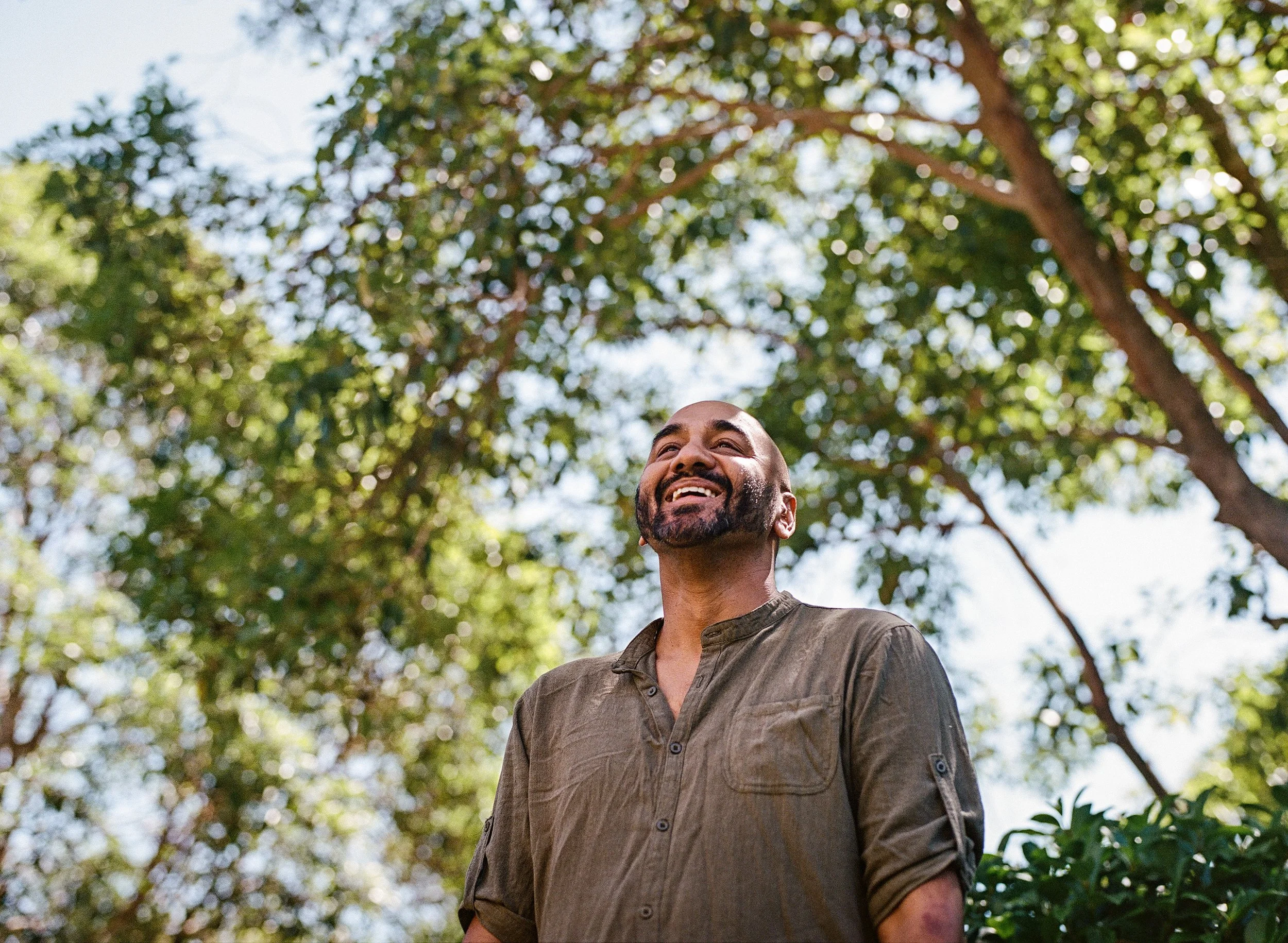
Listening to you speak at the Adelaide launch of Gather Up Your World, something really settled in my heart—this vision of what it means to be Australian, and to build a life here. To be able to come with our languages, our food, our families, our rituals—to fully inhabit both the lives we’ve lived and the ones we’re still building. In the book, it feels as though your mother offered you a kind of template for how that might look. I wanted to ask how you’re building on that now, and how you’re expanding that vision in your own life.
My mother—as we’ve discussed—could be incredibly hard to live with. I was often at the brunt of the difficulties she faced, and that was tough. But the gifts she’s given me have made my life infinitely easier. One of those gifts is something she does instinctively, without even realising it: she lives completely outside the concept of the white gaze. She simply doesn’t give any fucks. I grew up in a world that had no time for, or even understanding of, any colonial way of defining how we breathe, think or feel. That freedom is a gift. It’s also a reminder of how sophisticated our own cultures are—and how important it is to move past the surface gestures of identity, like wearing certain clothes or performing certain rituals, and go deeper into why those traditions came to exist in the first place. That’s where the real power lies.
If you look closely at Hindu philosophy, beneath the modern romanticised forms of organised religion, there are profound ideas about how to co-exist with the natural world. So much of our singing, speaking, clothing and ritual arises from the understanding that we are inseparable from nature. Another great insight from Hindu philosophy is that contradiction is at the heart of existence: that something can be true even while its opposite is also true. You see this mirrored in Indigenous philosophy too, and in other First Nations worldviews around the world. These ways of thinking are deeply useful in navigating modern western life; they’re a balm for the fragmentation that so often comes with it. For my mother, this way of being was effortless. For us, it’s an active fight. We had to go through white schoolyards and white-dominated workplaces—and I don’t mean “white” pejoratively; there’s much I admire in western culture—but the instinctive message we received was to fit in. Our work now is to unlearn that.
This brings me to Two Blood, which you’re in rehearsals for as we speak. What drew you to the project, and what has it been like on Kaurna land?
It’s been unfurling. Adelaide didn’t display its delights automatically; little by little I’ve found enclaves—a bakery near me, the way they greet you. Last night I did an ABC Radio interview at Elder Park by the river. Adelaide has a beautiful relationship with its waterways and natural environment.
Two Blood is about possibilities for solidarity between First Nations and migrant communities. My belonging in Australia wouldn’t be possible without the welcome I’ve received from First Nations communities. I’ve worked on Country; whenever I go out there, I feel more at home—the way aunties sit on mats, how they understand who they are—it reminds me of Sri Lanka. And their welcome is profoundly moving for a migrant.
Professionally, Two Blood puts forward a different idea of Australia—a long history of migration and exchange, pre-colonisation. Those of us coming now are connected to that history. The work tips the scales of what it feels like to be Australian—opening up and expanding how people are allowed to feel Australian. There are many valid ways; we need to see them to feel them.
I haven’t yet had the chance to see Counting and Cracking—I really hope to one day —but everyone I’ve ever met you has seen it were just incredibly moved by it. Many said they came out of the theatre in tears.
I also loved the monologue from the play which you include in Gather Up Your World, and which your mother read at the Sydney Writers’ Festival. In Sri Lanka’s post-war years, there’s been this slow but steady proliferation of stories—intimate, singular, deeply personal—and yet so necessary in helping us understand the many ways people survived that time and carried it forward.
I wanted to ask how you create that space in your work—for a story to be both deeply intimate and personal, but also expansive enough to hold other voices and truths.
The answer to that is—it’s really vexed and difficult. On one hand, I’m proud and deeply aware of this growing body of Sri Lankan stories, and of my small role in that. It’s been lovely to speak with people in major institutions and other powerful parts of the arts who’ve become more open to work by others of Sri Lankan heritage after seeing Counting and Cracking. That’s beautiful. But the multiplicity is the point. It’s about seeing many shades of experience. And at the same time, I’m acutely aware that the poorer parts of our community—those facing economic hardship or a poverty of power—are still not represented in the same way. For example, there’s still very little about the Tamil plantation workers who originally came from India and have had a far harsher time than many of us.
It wouldn’t feel right for me to tell their stories, because that’s not what happened in my family—but I do try to support those who are telling them. Where I do feel a sense of permission is when elements of the wider community give it directly. For example, when I was writing Counting and Cracking, I spent time in northern Sri Lanka with people who’d been imprisoned during the war and had just come out. Those were incredibly intimate conversations, and many of them were explicit in wanting their stories told. From that position of permission, I felt able to weave those truths into the broader tapestry of the work.
That process continued through casting. One of our actors, Anthonythasan [Jesuthasan], played a Jaffna boy—a character from a part of the community with very little power or visibility. When I reached out to him about the role, he didn’t respond for days, and then finally wrote back with a one-line email: “This is my story.” That moment changed everything. Once he joined the production, the character grew—his lived experience deepened what was already on the page, and the relationship between us made it possible to weave more of those overlooked stories into the play. The other extraordinary thing about theatre—unlike a book—is that it’s alive. It keeps changing. It’s fucking annoying, but it’s also beautiful, because the community keeps responding to it. Every new staging expands it, allowing more perspectives in.
Even the most staunch nationalists in our community have a fascinating relationship with the play. They hate parts of it—they’re furious at me—and yet they love that so many different kinds of Australians come to see it. They value that it helps others understand what their people went through, and are still going through. That tension leads to conversation. They tell me what they don’t like, and that allows me to reflect, to rewrite—not to appease, but to engage in a more nuanced, mature dialogue because of the play. The work exists because of the real world, but then it changes the real world—and that, in turn, changes the work. That’s been one of the most surprising and beautiful things—to realise how theatre can keep weaving in more of our community as we keep evolving together.
A final question. The book mentions a year-long season of large-scale works with Powerhouse Publishing and Powerhouse Museum, and a foundational program at Powerhouse Parramatta. What can you share with us?
We haven’t announced it publicly yet, but I can say I’m really excited. I’m writing other plays and thinking about art and the natural world in a climate-changed era—how art can become essential again, tied to season and community the way old rituals were. It will involve a lot of people from western Sydney and a handful of world-class South Asian artists, manifesting each chapter of the book in surprising ways over a year—shifting with the seasons.
Find out more
Interview by Smriti Daniel
Photographs by Teresa Tan