
5 Questions with Neha Kale
Neha Kale is a widely acclaimed writer of criticism, journalism, essay and other nonfiction. Her work focuses on art, contemporary culture, and society, exploring overlooked narratives and the way history and power shape individual experience. She has contributed to The Guardian, The Saturday Paper, ArtReview, Vogue, BBC, Griffith Review, The Sydney Morning Herald among many others.
Neha speaks to us about her first book, Foreign Return: On Art and Inhabitation, out now with NewSouth Books.
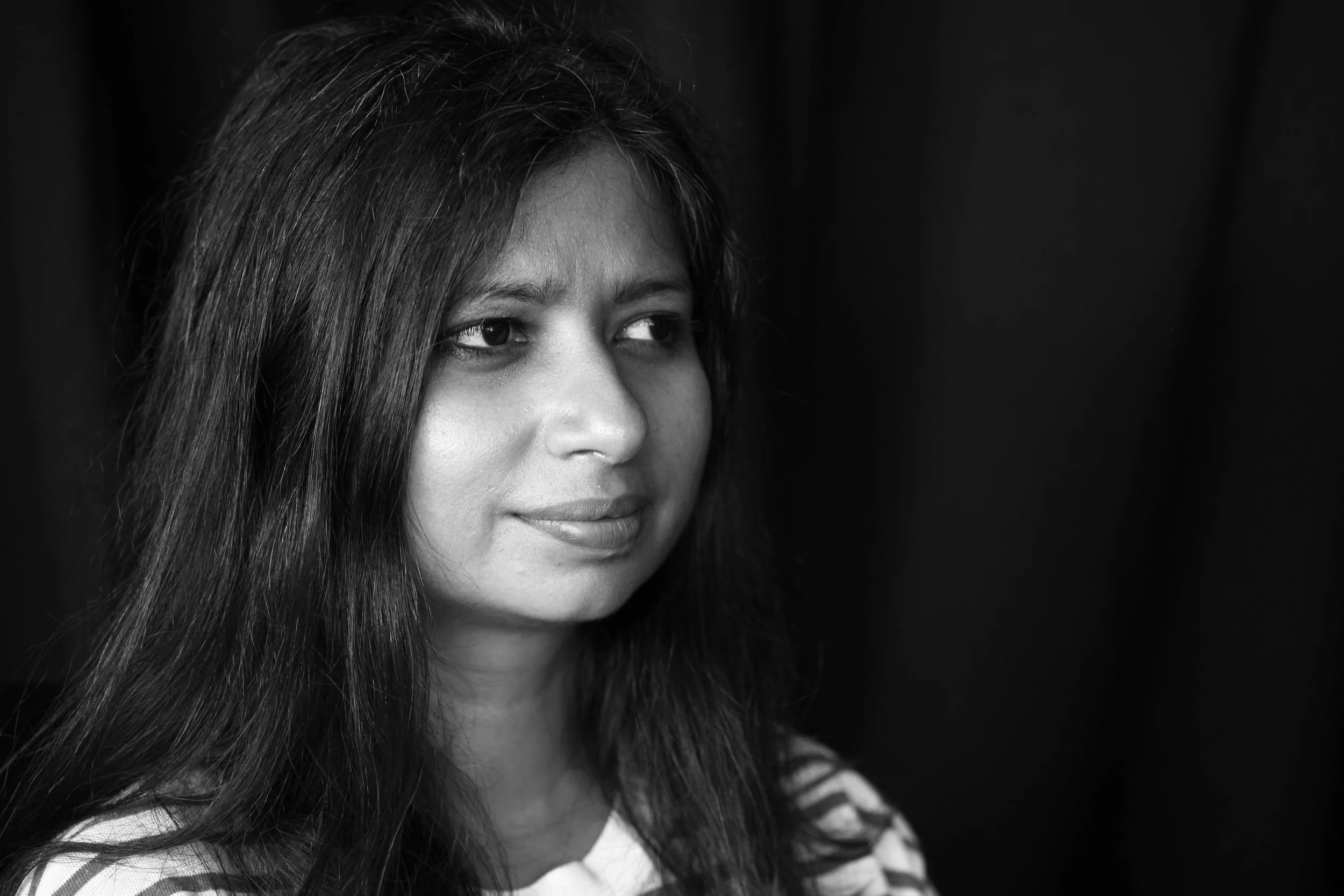
Neha Kale. (Image: Supplied)
No.1
Foreign Return is your first book, after a persistent writing trajectory and draws on both memoir and art criticism. What inspired your choice of genre and form?
I’ve been working as a writer for over fifteen years, in journalism and art criticism and first-person essay. But for the last half decade or so, I have had this sense that the constraints of writing for an audience—the need to be legible to a certain kind of reader, the imperative, always, to build towards some kind of answer—was taking me further away from who I really was as a writer, and what I wanted to do with my work. In my journalism career, particularly columns that I had written for places like The Sydney Morning Herald and SBS, I had written, often, about migrant experience. But I had grown tired of this voice. I had grown tired, too, of the narratives of migration that I had internalised, the idea that life always moved forward, toward progress and betterment—a narrative that echoed neoliberal logic, that was also patently at odds with the anti-migrant sentiment of this moment.
It was a story that didn’t account for the blank spaces and voids I could sense under the surface of my own life, that I had no language for. I grew obsessed, over the years I was writing Foreign Return, with trying to name this ache. I started studying poetry, revisiting books by writers I loved: Olivia Laing, but also Christina Sharpe and Anne Boyer, Eula Biss and Michael Ondaatje, writers who had loosely worked in literary nonfiction, itself a contested form, always coming up against its own limits. I thought: what if I could write a book that opened outward, that was more interested in images and questions rather than definitive conclusions? I wasn’t sure if I could do it, but I knew I wanted Foreign Return to imagine a freer way to live.
No.2
Tell us a little about the tripartite structure of Foreign Return—it seems to move from the local to the global, but I am so interested in how the third section, “ground”, somehow underwrites both, adding a subtle, complicating touch to this movement.
The word ‘movement’ is very astute! I’m a very visual writer and when I was imagining the structure of Foreign Return, which came early in the process, I pictured a narrative that spiralled outwards, or a set of three movements—including returns and refrains—the way a piece of music might work. Traditional migrant narratives, especially as they are packaged and marketed in the West, often assume the search for home as a journey between points of departure and arrival, from chaos to certainty. But in my life—the life of my narrator—the opposite was true. The past haunted the present. In the world in which we live, shaped as it is by colonial legacy, there is no promise of stability. There was a violence, to me, in this idea of linear time—this delusion of constant progress—which leaves no space to mourn the selves and homes we’ve lost or imagine other possible futures.
The tripartite, circular structure—which ends in “ground”, where the narrator is reckoning with what it could mean to live with beauty and dignity on this continent—stemmed from lots of thinking and dreaming. Lots of wandering in landscapes and nature, to envision a narrative form that could be rooted in relation rather than possession or destruction, that felt—to me—more humane.
No.3
Memory is a formative motif in your work, running through both the personal and cultural fabric of your writing. Tell us about the process through which memory finds its way into your writing?
Foreign Return is a book about the search for home, that equally became a book about the persistence of memory—its landscapes and textures and emotional contours. I was interested in memory as a way of measuring time, memory as articulating a kind of emotional and bodily history that lives outside of archives and records and validating these experiences—which are so often dismissed by the culture as minor—by giving them form. Writing Foreign Return, after so many years of working professionally as a writer, I had to give myself permission to experiment and play. A lot of the book was written longhand, drafts typed up, and shaped later, on the computer. Often, the process felt like channelling or summoning, like communing with something that longed to be named.
No.4
I found your formulation of “ghost routes,” and the way you capture the spectral nature of inhabiting different worlds so compelling; I love the line, “I am always walking a ghost route. Tracing the path back to our old home, even as I inhabit every new one.” Could you tell us more about the idea of the ghost route and what it makes possible for you as both a writer and a migrant?
Thank you! Halfway through writing Foreign Return, I realised that what I thought was a book about home, was also shaped by what I call a ‘shadow story’ – of psychic dispossession and its aftermath. Of succeeding in all the ways that are legible by the culture—by the migrant narrative that I was the ideal subject of – but still grappling with a sense of loss. To me, the metaphor of the ghost route—the path that still joins you to the people and places you love, even if invisible or unacknowledged—dignifies this feeling. That there might be nowhere to ‘arrive’ or no place to ‘return’ to, but you are held by all that you can’t see.
As the world as we know it disintegrates, the notion of home as shelter, as a stable place, feels less tenable. I hope that readers find this idea of the ghost route helpful: a path back to themselves, and to each other, that might lack physical dimensions but is no less real.
No.5
The epilogue to Foreign Return gestures towards a synthesis of the in-betweenness that characterises migrant experience; what you call a “third way” between “these different forms of being.” What does this third way mean to you? Is it a way of resolving that in-betweenness, or of learning to inhabit it differently?
Writing Foreign Return, I was interested in the question—how do you find home when you don’t have a home?—which spoke to me, not just a loss of home, but the way migrants, and women, are considered objects rather than subjects, dehumanised or hyphenated or forced into existing in parts.
In the book’s epilogue, which is set in New York City during last year’s ICE raids, but also surveys images by the Hong Kong-born American photographer Tseng Kwong Chi and paintings by the queer Pakistani painter Salman Toor, which I love for their moments of fleeting pleasure and transcendence, I started imagining this third way as a path made of places or moments in which these bodies can refuse surveillance—the logic of the patriarchy or the border, which I feel are inseparable from each other—and assume joy and wholeness again.
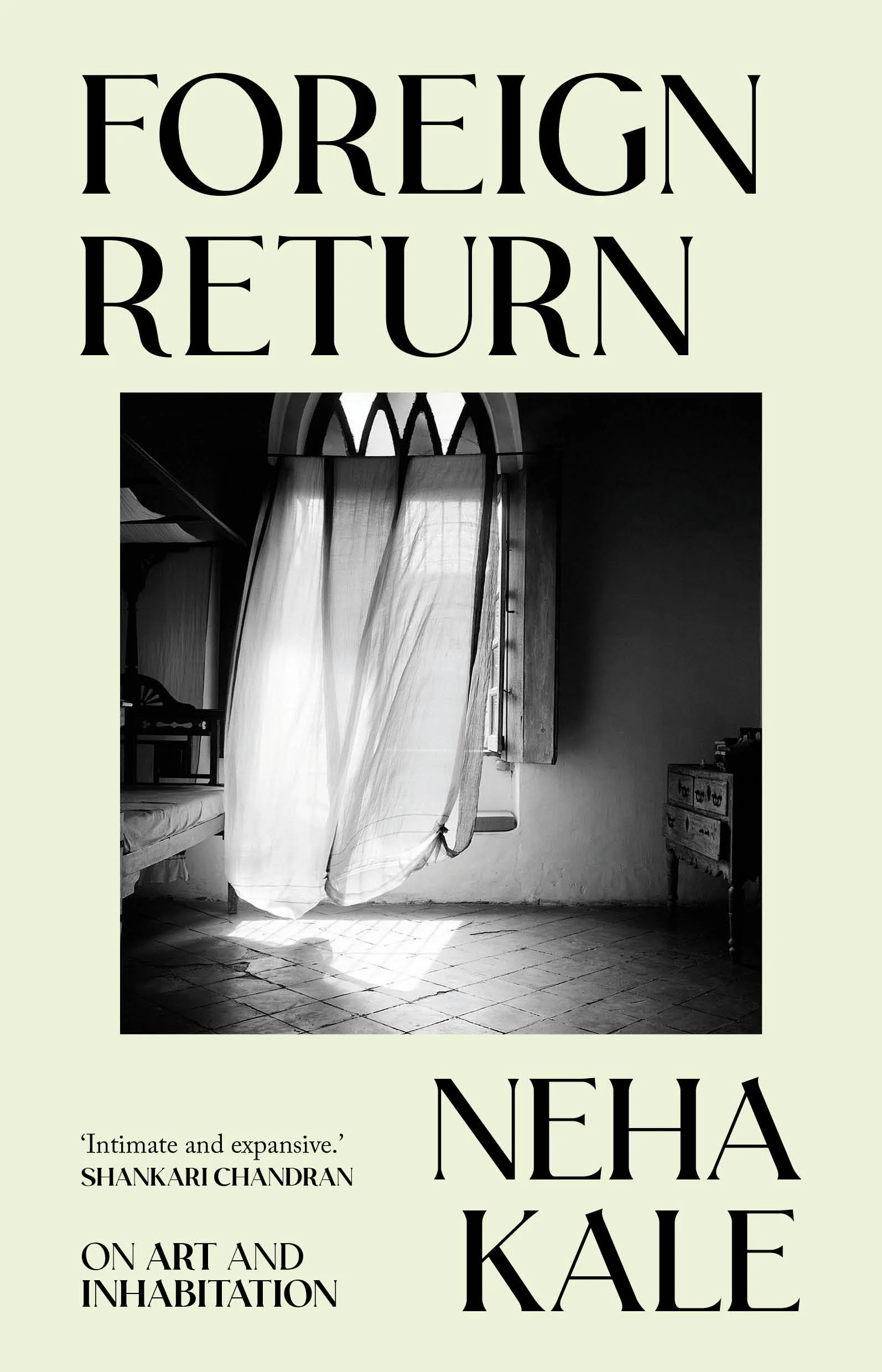
Find out more
Join Neha to launch Foreign Return on 17 September 2026, at Soundworks Music Studio, hosted by Brunswick Bound. More information here.